
For carpenters
Carpentry Invoice Maker
Framing, trim, decks and custom work billed with labor and lumber on one clean invoice. Trusted by 1M+ small businesses since 2020, with 25,000+ five-star reviews.
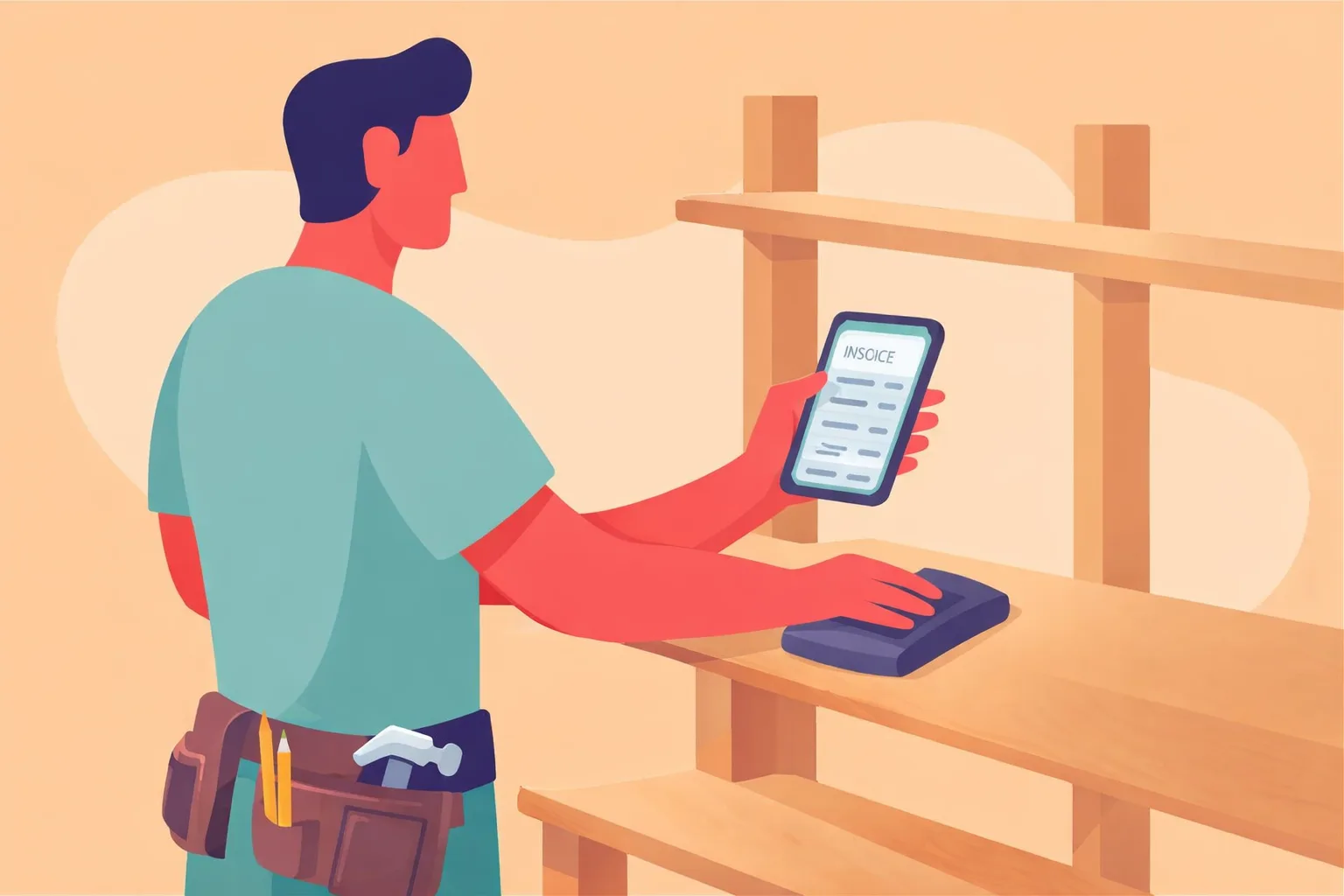
Why carpenters use InvoiceMaker
Carpentry jobs mix labor, lumber and hardware. Itemize them and clients pay without questions.
- Lumber and labor separate. Show material costs and your time clearly.
- Save your rates once. Store your common services and prices, then reuse them on every job.
- Quote first, bill second. Send an estimate, then turn it into the invoice in one tap.
- Get paid on the spot. Every invoice carries a payment link for card, Venmo, Zelle or PayPal.
- Works anywhere. InvoiceMaker runs on iPhone, Android, Mac and the web, all on one account.

How to make a carpentry invoice in 5 steps
- Add your business details. Business name, logo and contact info.
- Add the client. Client name, billing address and the job or event details.
- List labor and lumber. Hours or project price, then lumber and hardware.
- Add extras and tax. Any add-ons, travel or materials, plus tax where it applies.
- Set terms and send. Pick a due date and send it with a payment link.
What to include on a carpentry invoice
| Field | Why it matters |
|---|---|
| Invoice number and dates | Service date, issue date and due date keep records straight. |
| Your business and contact details | So the client knows who to pay and how to reach you. |
| Client details | Name and billing address, plus the job location if it differs. |
| Scope of work | Framing, trim, deck or custom build, in a sentence. |
| Itemized charges | Separate lines show exactly what the client is paying for. |
| Payment terms and methods | When payment is due, how to pay and any late fee. |
Common carpentry line items
| Line item | How it’s usually billed |
|---|---|
| Labor | Hours × rate or per project |
| Lumber | Per board foot or per piece, with markup |
| Hardware | Per item |
| Finish work | Per linear foot (trim) or flat |
| Deposit | Subtracted from the final balance |
Carpentry by the numbers
- 889,700 carpenter jobs in 2025 (BLS).
- 25% of carpenters are self-employed (BLS).
- $60,580: median annual pay in May 2025 (BLS).
- 56% of U.S. small businesses are owed money from unpaid invoices, averaging $17,500 each (QuickBooks, 2025).
- 47% of small businesses have invoices more than 30 days overdue (QuickBooks, 2025).
Send the invoice the day the work is done, with a payment link attached, and most clients pay right away.
Free tools for carpenters
- Markup calculator: price materials and parts with your markup built in
- Billable hours calculator: turn labor time into an invoice total
Related carpentry templates
FAQs
The scope of work, labor, lumber, hardware, any deposit, tax and the total.
Many carpenters do. Build the markup into each material line.
Bill labor and materials separately, and invoice in stages on larger builds.
Yes. Every InvoiceMaker invoice includes a payment link for card, Venmo, Zelle or PayPal.
InvoiceMaker runs on iPhone, Android, Mac and the web, all on one account.