
For handymen
Handyman Invoice Maker
A dozen small jobs a week means a dozen invoices. Pick the client, add the work and materials, send, and get paid. Trusted by 1M+ small businesses since 2020, with 25,000+ five-star reviews.
Why handymen use InvoiceMaker
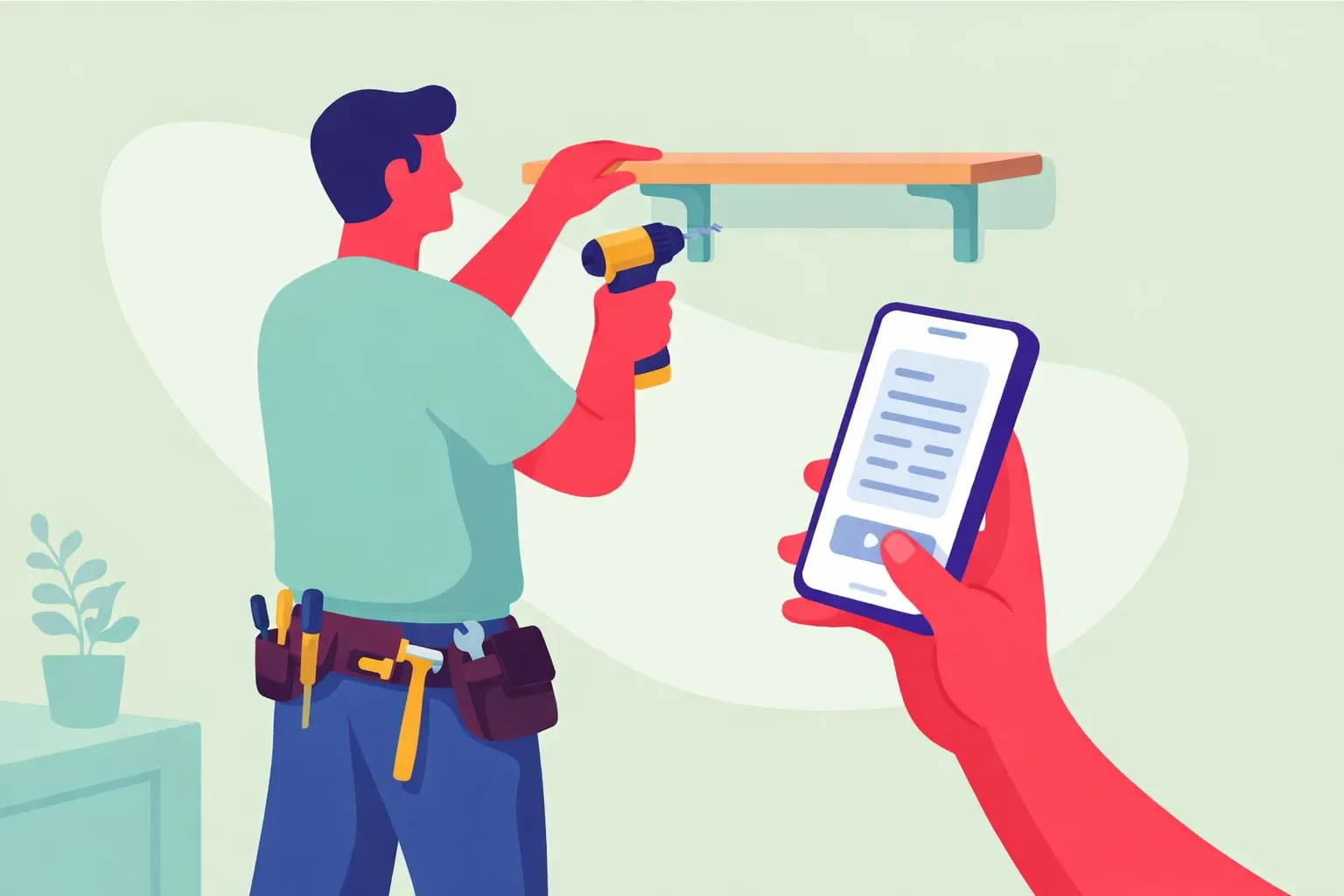
Handyman work is lots of small jobs. Each invoice should take a minute, not twenty.
- Hourly or flat rate. Bill however you price the job.
- Materials with markup. Add what you bought, priced your way.
- Fast repeat billing. Save clients and common jobs, then duplicate past invoices.
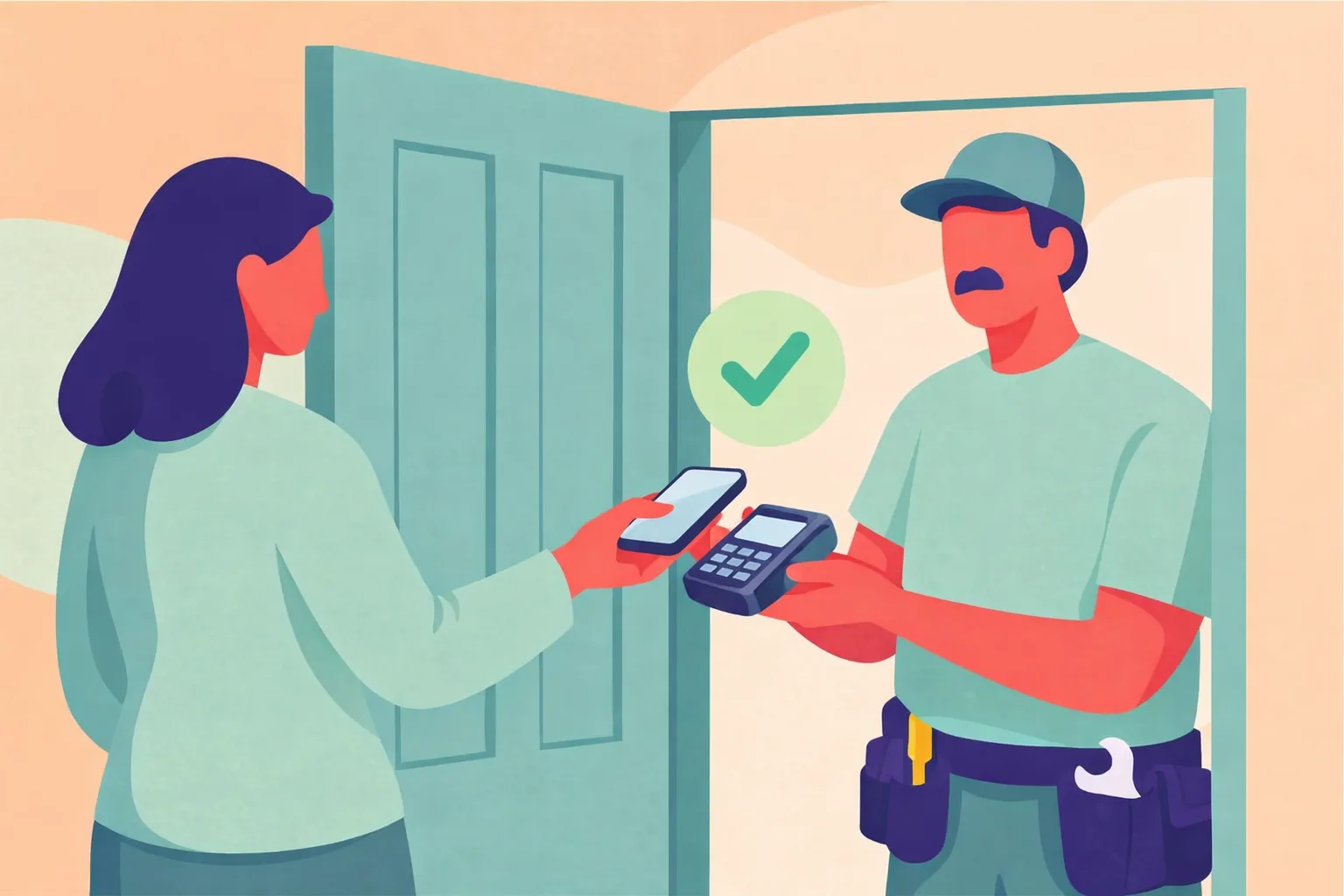
- Paid on the spot. Every invoice carries a payment link for card, Venmo, Zelle or PayPal.
- Phone first. Invoice before you leave the house.
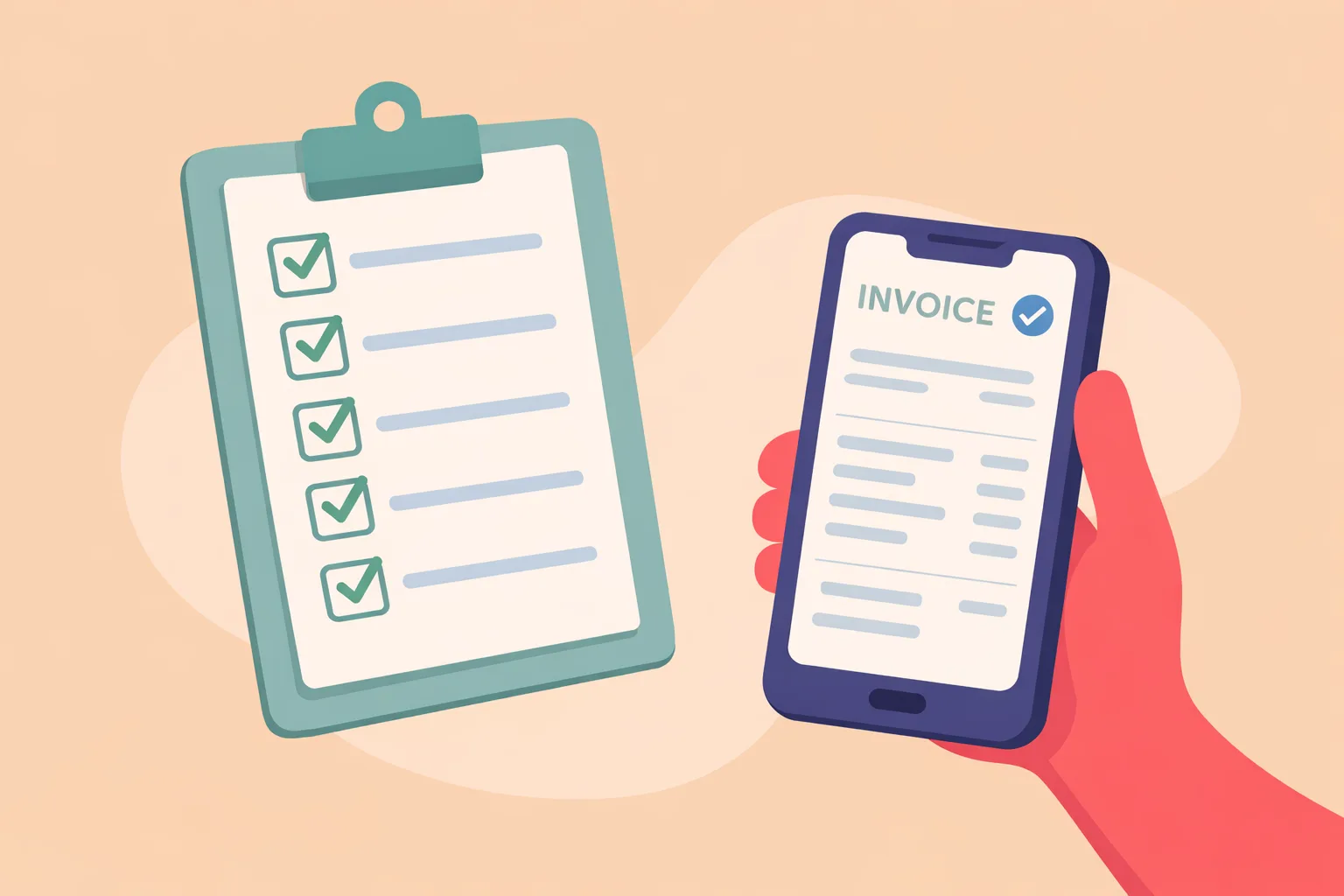
How to make a handyman invoice in 5 steps
- Add your business details. Business name and contact info.
- Add the client and address. Client name and job address.
- List each task. With hours or a flat price per task.
- Add materials and trip charge. What you bought, plus any travel fee.
- Set terms and send. Send it with a payment link.
What to include on a handyman invoice
| Field | Why it matters |
|---|---|
| Invoice number and date | Keeps your records straight. |
| Client and job address | Who and where. |
| Each task performed | A line per task makes a long list easy to read. |
| Labor and materials | Hours or flat rate, plus parts and supplies. |
| Trip or haul-away charges | Listed separately if you charge them. |
| Total and payment terms | When it’s due and how to pay. |
Common handyman line items
| Line item | How it’s usually billed |
|---|---|
| Labor | Hours × rate, often with a 1-hour minimum |
| Flat-rate task | Fixed price per task, e.g. mounting a TV |
| Materials | Per item, with markup |
| Trip charge | Flat fee per visit |
| Haul-away | Flat fee per load |
Maintenance and repair by the numbers
- 1,621,800 general maintenance and repair worker jobs in 2025 (BLS).
- $49,590: median annual pay in May 2025, or $23.84 an hour (BLS).
- About 148,700 openings a year are projected from 2025 to 2035 (BLS).
- 56% of U.S. small businesses are owed money from unpaid invoices, averaging $17,500 each (QuickBooks, 2025).
- 47% of small businesses have invoices more than 30 days overdue (QuickBooks, 2025).
Small jobs add up, and so do small unpaid invoices. Get paid before you leave.
Free tools for handymen
- Billable hours calculator: turn labor time into an invoice total
- Markup calculator: price materials and parts with your markup built in
Related handyman templates
FAQs
Both are common. Hourly suits open-ended work and flat rates suit well-defined tasks. InvoiceMaker handles either.
Add each item as a line, with your markup included.
A flat fee for travel to the job. List it as its own line if you charge one.
Yes, through the payment link on every invoice.
InvoiceMaker runs on iPhone, Android, Mac and the web, all on one account.